 how-to
How Do You Verify a Mechanic's Repair Estimate?
Last Updated: November 12, 2026
Quick Summary
To verify mechanic estimates, ask for a detailed written quote that itemizes parts, labor hours at a stated rate, and fees, then compare each line against a labor guide and other shops' quotes. Confirm the diagnostic fee, whether it applies to the repair, and the estimate's validity period before you sign.
- A verbal number is not an estimate; ask for an itemized written quote every time.
- A complete estimate includes the VIN, parts list, labor hours, fees, total, and validity period.
- Flat rate protects you from paying for a slow technician's actual clock time.
- Ask whether the diagnostic fee is applied to the repair if you approve the work.
- Get a second opinion when a shop won't explain a line or frames an upsell as urgent without evidence.
Table of Contents
- Why Verifying a Repair Estimate Protects Your Wallet
- Requesting a Detailed Written Estimate
- Verifying Diagnostic Fees Before You Approve Work
- What Should a Car Repair Estimate Include?
- How to Compare Mechanic Quotes Side by Side
- Using a Free Car Repair Estimate Calculator the Right Way
- Your Car Repair Estimate Checklist Before You Sign
- Hidden Fees, Upsells, and When to Get a Second Opinion
- Checking Your Consumer Rights and Warranty Coverage
- Schedule Service at Mason Street Auto Care
- Frequently Asked Questions
Why Verifying a Repair Estimate Protects Your Wallet
A repair estimate is a shop's written promise of what a job will cost. Learning how to verify mechanic estimates before you sign is the single best way to avoid paying for work your car doesn't need.
Here's the hard part most drivers learn too late: the estimate is not a bill, and the bill is not always the estimate. The gap between the two is where surprise charges live.
Requesting a Detailed Written Estimate
Ask for the estimate in writing before anyone touches your car. A verbal number is not an estimate; it's a guess you can't hold anyone to.
Ask for your estimate in writing, every time, even for a small job.
A common mistake is accepting a single lump-sum number over the phone. Push back. You want a document you can read line by line, and you want to keep a copy.
Verifying Diagnostic Fees Before You Approve Work
A diagnostic fee is what a shop charges to find the problem. It is separate from the repair itself. Ask two questions: how much is the fee, and does it get applied to the repair if you approve the work?
Ask whether the diagnostic fee is applied to the repair if you approve the work, so you know what you're agreeing to before you say yes.
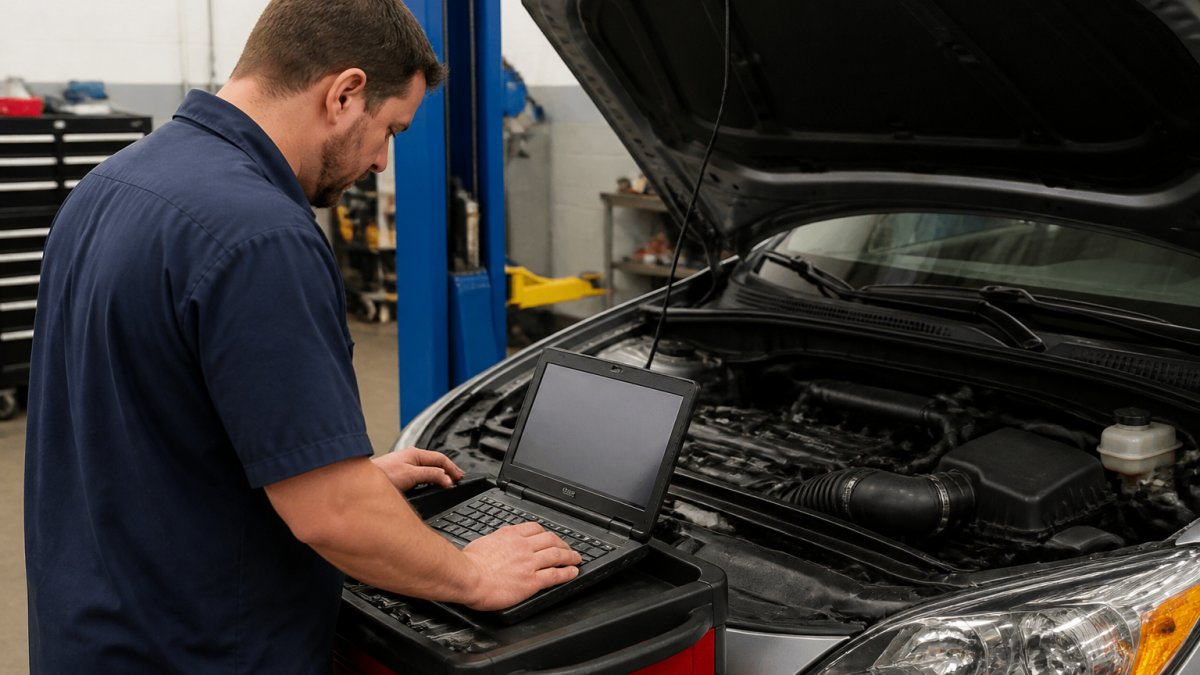
Watch out: a vague "diagnostic" charge with no explanation of what was tested is a red flag. If you're weighing whether a paid diagnostic is even worth it, our guide on professional car diagnostics walks through when a diagnostic fee is legitimate.
What Should a Car Repair Estimate Include?
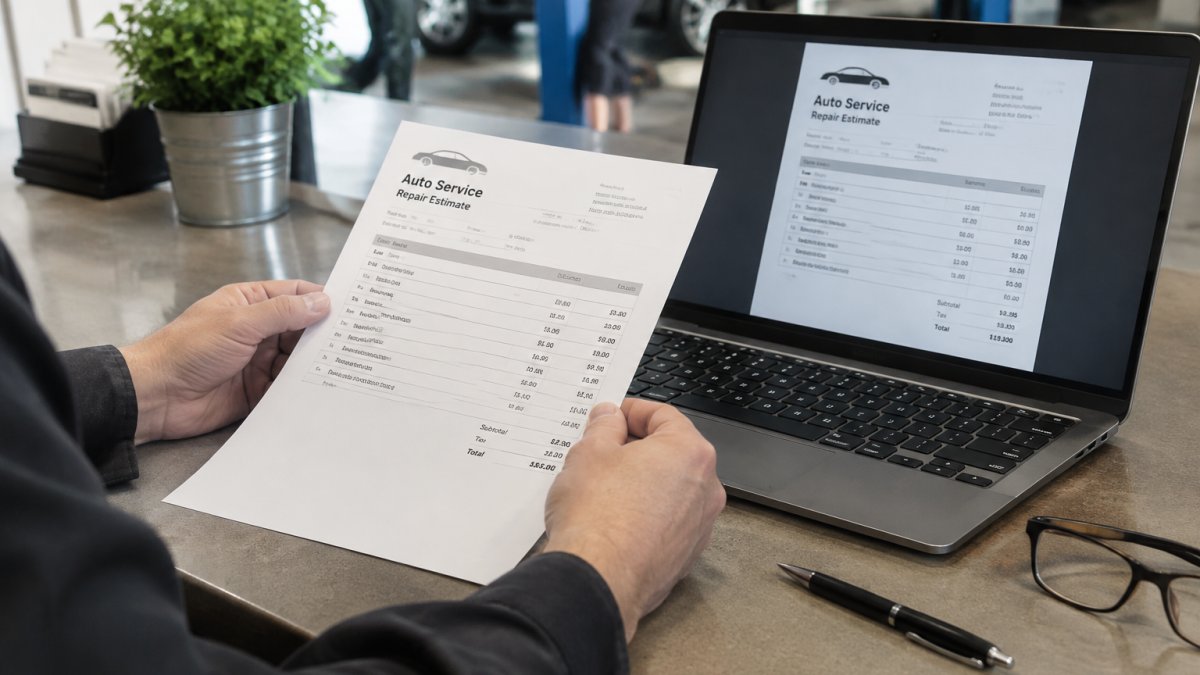
A complete car repair estimate includes six things: your vehicle identification number, an itemized parts list, labor hours at a stated rate, shop supplies and fees, the total, and how long the quote stays valid. If any of those are missing, ask for them before you sign.
Here's what a solid estimate looks like:
- Vehicle identification number (VIN): confirms the exact car and parts
- Parts line items: each part named, with OEM or aftermarket marked
- Labor hours: hours listed per job, at a stated hourly rate
If a term on your quote is unfamiliar, our auto repair dictionary explains words like flat rate, OEM, and aftermarket in plain language.
Labor Hours: Flat Rate vs. Actual Time
Flat rate is a set number of hours a job "should" take, pulled from a labor guide. The technician gets paid for those hours whether the job runs fast or slow. Actual time is the real clock time the job takes.
Flat rate protects you from paying for a slow technician. It also means the shop, not you, absorbs the cost when a job runs long.
Parts Line Items: OEM vs. Aftermarket Components
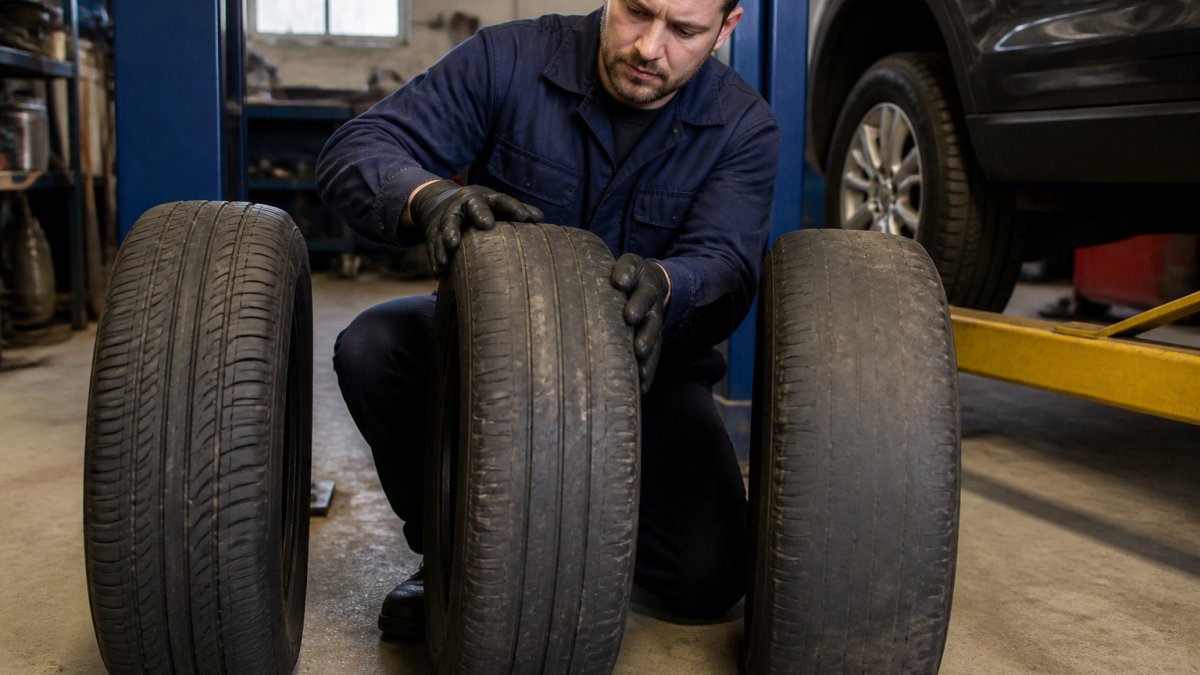
OEM parts are made by the vehicle manufacturer. Aftermarket components are made by other companies and often cost less. Both can be fine; the problem is paying OEM prices for aftermarket parts.
Check each parts line. If it says OEM, ask to see the box or part number. If it says aftermarket, ask whether a remanufactured or salvage part would be cheaper and still safe.
How to Compare Mechanic Quotes Side by Side
To compare mechanic quotes, line up the same three columns for each shop: parts, labor, and fees. The lowest total is not always the best value. A cheap quote that skips a needed part costs more later.
Use this simple comparison:
| What to compare | Quote A | Quote B |
|---|---|---|
| Parts (OEM or aftermarket?) | ||
| Labor hours and rate | ||
| Shop supplies and fees | ||
| Diagnostic fee included? | ||
| Warranty on the work | ||
| Estimate validity period |
A quote that lists fewer parts than another may be cutting corners, not saving you money. Ask each shop to explain any line the other quote includes and theirs doesn't.
Dealership vs. Independent Shop Pricing Models
Dealerships often charge higher labor rates and use OEM parts by default. Independent shops usually charge less per hour and can offer aftermarket options. That doesn't make dealerships wrong or independents better; it means the pricing model differs.
The real difference comes down to what you're paying for. At a dealership, part of your bill covers a bigger overhead. At a good independent shop, you're often paying for the same certified work with more flexibility on parts.
Using a Free Car Repair Estimate Calculator the Right Way
A free car repair estimate calculator gives you a ballpark, not a binding price. Use it to sanity-check a quote, not to replace one. Enter your make, model, and the repair, and see whether a shop's number lands in a reasonable range.
Keep two things in mind. First, calculators use averages, so your car's condition can push the real price up or down. Second, a calculator can't see a rusted bolt or a hidden leak.
Your Car Repair Estimate Checklist Before You Sign
Run this car repair estimate checklist before you approve any work. It takes five minutes and can save you hundreds.
- The estimate is in writing and itemized
- The VIN matches your vehicle
- Labor hours are listed per job at a stated rate
If a shop resists giving you any of these, that tells you something. A trustworthy shop expects you to ask.
Hidden Fees, Upsells, and When to Get a Second Opinion
Hidden fees and upsells are the fastest way a fair quote turns into a big bill. The fees are easy to spot once you know the names. The upsells are harder, because they usually arrive dressed as safety advice. Learning to separate a genuine safety recommendation from a sales script is the core skill in learning to verify mechanic estimates.
The common add-on fees
Watch for charges that appear only at checkout: a "hazardous waste disposal fee" you weren't told about, a sudden "core charge," a "shop supplies" percentage that wasn't on the estimate, or a "diagnostic re-check" fee added after the fact.
A core charge is a refundable deposit on some parts, returned when you hand back the old part. It should be on the estimate, not sprung on you.
The psychology of the upsell
Most upsells follow a predictable pattern. The service advisor frames an optional service as urgent, ties it to safety, and creates time pressure. Common examples include:
- The "safety" flush. Transmission, coolant, brake, and power-steering flushes are frequently recommended on a mileage schedule rather than on evidence of contaminated fluid. Ask to see the fluid condition or a test result before approving.
- Premature maintenance. A recommendation to replace belts, hoses, or filters well before the manufacturer's maintenance schedule. Check your owner's manual interval first.
- The "while we're in there" add-on. Once a major job is approved, additional repairs are suggested because the labor is already partly paid. Sometimes this is genuine efficiency; sometimes it's a way to bundle work you didn't plan for. Ask for each add-on to be priced and justified separately.
A useful test: ask the advisor to rank each recommended item as "required now," "required soon," or "optional." A shop that can't or won't rank them is selling, not advising. Ask what happens if you decline, and whether the item can wait until your next service.
When to get a second opinion
Get a second opinion when a quote includes major work you didn't expect, when the price is far above other quotes, when a shop won't explain a line, or when an upsell is framed as urgent without evidence. A second shop can confirm whether the repair is needed. To recognize pressure tactics before you pay, read our guide on how to spot dishonest mechanic practices.
Checking Your Consumer Rights and Warranty Coverage
Your consumer rights and warranty coverage help determine who pays if a repair fails. Many states have auto repair laws or general consumer protection statutes that address written estimates, authorization before work, and your right to replaced parts. Knowing the general pattern of these rules can help you verify an estimate.
The rights that show up in most state repair laws
While the details vary by state, auto repair rules commonly address the following:
- A written estimate on request. Many states require a shop to give you a written estimate before work begins, and some require your written or oral authorization before exceeding it.
- Authorization for additional work. If the final cost will exceed the estimate by more than a set amount, the shop must contact you for approval. Ask what that threshold is in your state.
- Return of replaced parts. Many states give you the right to inspect or keep the parts replaced, unless the work was under warranty or the part is subject to a core charge. Ask for the old parts back on the estimate.
To find the rules that apply to you, check your state attorney general's office or your state's consumer protection agency for guidance on auto repair rights.
Warranty coverage: the part that outlasts the repair
Warranty coverage matters just as much as the estimate itself. Ask three questions before you approve work: what the shop's warranty covers, how long it lasts, and whether it covers parts, labor, or both.
If your car is still under a manufacturer warranty, confirm the repair won't void it. Under the federal Magnuson-Moss Warranty Act, a manufacturer generally cannot void your warranty simply because an independent shop did the work, provided the parts meet the manufacturer's specifications (the FTC). Our guide on what a basic car warranty covers explains how to check before you approve work.
Watch out: a shop that refuses to put its warranty terms in writing, or that tells you any independent repair will void your factory warranty, is giving you a reason to walk away.
Schedule Service at Mason Street Auto Care
The best defense against a padded estimate is a shop that shows its work. When you're ready for an honest quote, book service or reach the shop and get a verified estimate you can trust.
Verifying an estimate takes a few minutes and a few good questions. If a shop won't put it in writing or explain the numbers, that's your answer.
Frequently Asked Questions
How can I tell if a mechanic's repair estimate is fair?
Compare the itemized quote against a labor guide for your vehicle's make, model, and year, and check that labor hours and parts markup fall in a normal range. Ask whether the shop used OEM parts or aftermarket components, and confirm the diagnostic fee is disclosed upfront. Getting a second written estimate from another shop on the same repair gives you a real benchmark, and any quote that is far above or below the others deserves a closer look before you authorize work.
Should I get a second opinion before approving a car repair?
For anything beyond routine maintenance, a second opinion is worth the time. Ask the second shop to inspect the vehicle and provide its own written estimate, then compare labor hours, parts, and diagnostic fees side by side. A trustworthy shop will not pressure you to skip this step. If two independent estimates agree on the diagnosis and the price range, you can approve the repair with confidence. If they diverge sharply, ask both shops to explain the difference.
Is there a free app or website for estimating car repair costs?
Several free car repair estimate calculators exist online and pull from labor guides and parts databases. They give a rough range, not a binding price, so use them to sanity-check a quote rather than replace one. Enter your vehicle identification number, the repair type, and your ZIP code, then compare the result to the shop's written estimate. A large gap between the calculator and the quote is a signal to ask the service advisor how they arrived at their number.
What is the $3,000 rule for car repairs?
The $3,000 rule is a rough guideline some drivers use: if a single repair costs more than about $3,000, or exceeds the vehicle's fair market value, it may be time to consider replacing the car instead of fixing it. It is not an official standard, and the right threshold depends on your car's age, mileage, repair history, and total cost of ownership. Use it as a conversation starter with your shop, not a hard cutoff.