 ultimate-guide
What Is Included in Routine Maintenance: A Complete Guide
Last Updated: November 10, 2026
Quick Summary
Routine maintenance is the scheduled set of inspections, fluid changes, adjustments, and part replacements that keeps a vehicle safe and reliable between major repairs. It typically includes oil and filter changes, fluid level checks, tire rotation and pressure checks, brake inspection, battery testing, and filter replacement, following the service intervals in your owner's manual.
- Routine maintenance is planned work on a healthy vehicle; a repair fixes something that has already failed.
- A practical car maintenance checklist covers eight areas, from fluids and filters to belts, hoses, lights, and wipers.
- Oil and filter changes plus tire rotation typically fall every 5,000 to 7,500 miles.
- Mileage, time, and condition are three clocks running at once, and the earliest trigger wins.
- Keep a log of date, odometer, work done, parts, and receipts to support warranty claims and resale value.
Table of Contents
- What Routine Maintenance Actually Covers
- The Car Maintenance Checklist Every Driver Should Know
- Building a Car Maintenance Schedule by Mileage
- How Driving Conditions Change Your Service Interval
- What Routine Car Maintenance Cost Really Depends On
- Warning Signs That Maintenance Is Overdue
- DIY Checks vs. Work for a Professional
- Finding Trustworthy Routine Car Maintenance Near Me
- Frequently Asked Questions
What Routine Maintenance Actually Covers
Routine maintenance is the scheduled set of inspections, fluid changes, adjustments, and part replacements that keeps a vehicle safe and reliable between major repairs.
The goal is simple: catch wear and tear while it is still cheap to address. A worn belt replaced on schedule costs far less than an engine damaged when that belt snaps. That is the whole logic of preventive maintenance.
Routine Maintenance vs. a Repair
Routine maintenance is planned work done on a healthy vehicle to prevent problems. A repair is unplanned work done to fix something that has already failed or is failing.
The line matters when you are looking at an estimate. An oil change, tire rotation, or brake pad replacement at a scheduled interval is maintenance. A water pump replacement after an overheating event is a repair.
The Car Maintenance Checklist Every Driver Should Know
A practical car maintenance checklist covers eight areas: fluids, filters, tires, brakes, battery, belts and hoses, lights and wipers, and a general inspection. The difference between a useful checklist and a generic one is that each line tells you what is being checked and what a failing result looks like. Here is the checklist we work from, with the inspection criteria behind each item.
- Engine oil and oil filter: oil level and condition checked against the dipstick's low and full marks, and the filter changed on the manufacturer's interval.
- Coolant: level and condition checked as part of routine service.
- Transmission fluid and brake fluid: level and condition checked on schedule.
- Tire pressure, tread depth, rotation, and balancing: pressure, tread, and rotation checked on interval, with balance addressed when needed.
- Brake pads and brake inspection: pads and rotors inspected as part of routine brake service.
- Battery test and battery connections: battery and connections checked as part of routine service.
Fluids, Filters, and the Parts That Wear Out
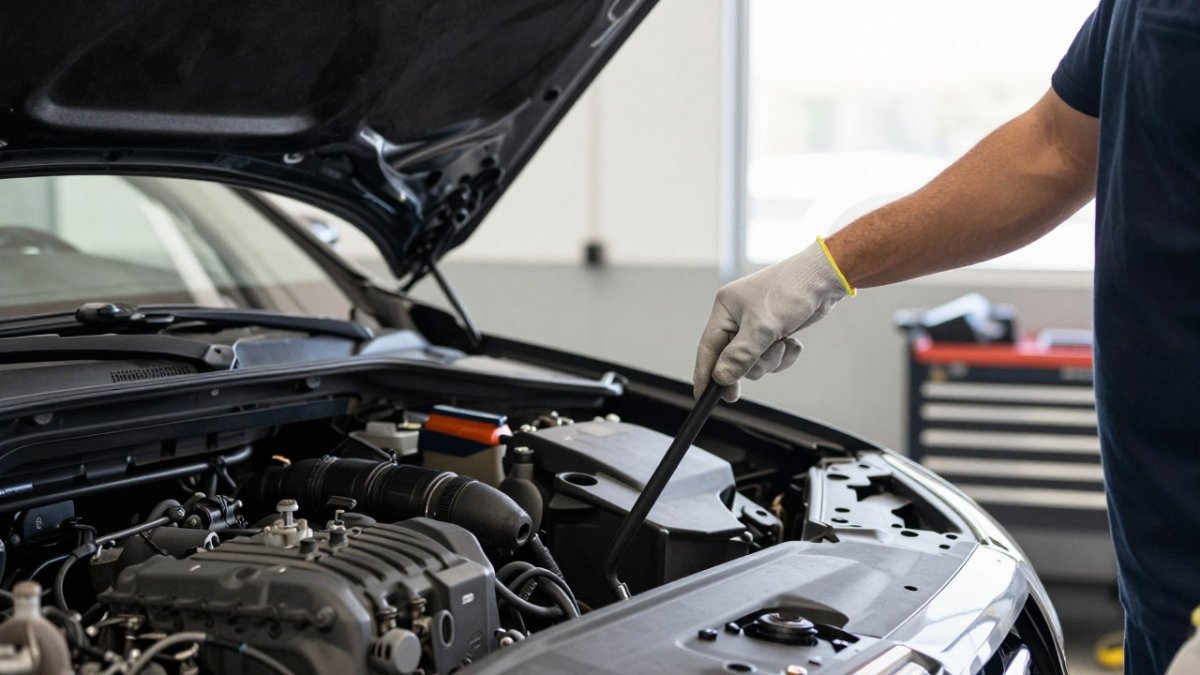
Fluids do two jobs: they lubricate and they carry heat away. Engine oil, coolant, transmission fluid, and brake fluid all degrade with heat and time, which is why the owner's manual gives each one a service interval rather than a "check it when you remember" instruction. Brake fluid is hygroscopic, meaning it absorbs moisture from the air over time; that moisture lowers its boiling point and is one reason the interval exists even when the level looks fine.
Filters trap what the fluid picks up. If a term on your estimate is unfamiliar, our auto repair dictionary explains common parts and fluids in plain language.
Watch out: a checklist item marked "checked" is not the same as "passed." Ask for the measured value so you can compare it against the next visit and see the trend rather than a single snapshot.
Which Checklist Items Are Safe to Do Yourself
Some checklist lines are genuinely owner-level: tire pressure, washer fluid, wiper blades, exterior bulb replacement on accessible housings, and reading the oil level. Others involve safety-critical torque specs, a lift, or fluid disposal and belong with a professional, brake pads and rotors, suspension components, transmission fluid on sealed units, and any diagnosis of a leak or warning light. If you are unsure where the line is, our article on spotting dishonest mechanic practices covers what a fair estimate and an honest inspection should look like.
Building a Car Maintenance Schedule by Mileage
A car maintenance schedule by mileage organizes the same tasks into tiers, and the owner's manual is the authority for your specific vehicle. A common structure looks like this:
| Interval | Typical Work |
|---|---|
| Every month | Tire pressure, lights, fluid level glance, wiper condition |
| Every 5,000-7,500 miles | Oil and filter change, tire rotation, multi-point inspection |
| Every 15,000-30,000 miles | Air filter, cabin air filter, brake inspection, alignment check |
| Every 30,000-60,000 miles | Transmission fluid, coolant service, belts and hoses, battery test |
| Every 60,000+ miles | Shocks and struts, spark plugs, deeper suspension inspection |
Treat these as a starting framework, not a rule. The manual's interval wins whenever it disagrees with a generic table, and the severe-service column in the manual usually shortens the oil, transmission, and coolant intervals. Severe driving, short trips, and towing all shorten the intervals. Your service history, if you have kept one, tells you what has actually been done.
Time, Mileage, and Condition: Three Clocks Running at Once
Mileage is only one of three clocks. The second is time: brake fluid, coolant, and some transmission fluids have time-based intervals because they degrade even in a lightly driven car, and tires age out from UV and ozone exposure regardless of tread. The third is condition: a battery that tests weak, a belt showing cracks, or a brake pedal that feels soft can justify service ahead of the schedule.
A consolidated schedule therefore has three columns, time, mileage, and condition, and the earliest trigger wins. A low-mileage car that sits for months still needs its fluids and tires evaluated on the time clock, and a high-mileage commuter may hit the mileage trigger long before the calendar one.
How Vehicle Type and Driving Conditions Shift the Schedule
Most practitioners find the "normal" schedule assumes gentle use, and most drivers do not drive gently. Stop-and-go commuting, short trips that never let the engine reach temperature, dusty roads, mountain grades, and heavy loads all count as severe service.
Vehicle type matters too. Hybrids often shut the engine off and run on electric power at low speed, which changes oil warm-up patterns and brake wear, regenerative braking can make pads last far longer while the brake hardware still needs inspection for corrosion.
What to Record and Why It Matters
Keep a simple log: date, odometer, what was done, parts used, and the shop or receipt.
Watch out: a schedule that lives only in your head tends to collapse at the first busy month. Put the next interval on the calendar when the current service is done, and treat the owner's manual interval, not a shop's reminder sticker, as the tiebreaker.
How Driving Conditions Change Your Service Interval
The "normal" schedule in your manual assumes gentle use. Most drivers do not drive gently.
Cold starts are the quiet culprit. A car that makes five short trips a day accumulates moisture in the oil and never burns it off, which is harder on the engine than a long highway commute. If your driving looks like that, follow the severe-service column.
What Routine Car Maintenance Cost Really Depends On
Routine car maintenance cost depends on four things: your vehicle's make and model, the interval you are at, the parts required, and local labor rates. A compact sedan and a heavy-duty truck need different fluids in different quantities, and a major-interval service costs more than an oil change because it includes more inspection and more parts.
For current prices or a quote for your vehicle, please visit our website or contact us directly.
Warning Signs That Maintenance Is Overdue
Your car usually tells you before something fails. Watch for these symptoms:
- Squealing or grinding when braking
- A steering wheel that pulls or vibrates at speed
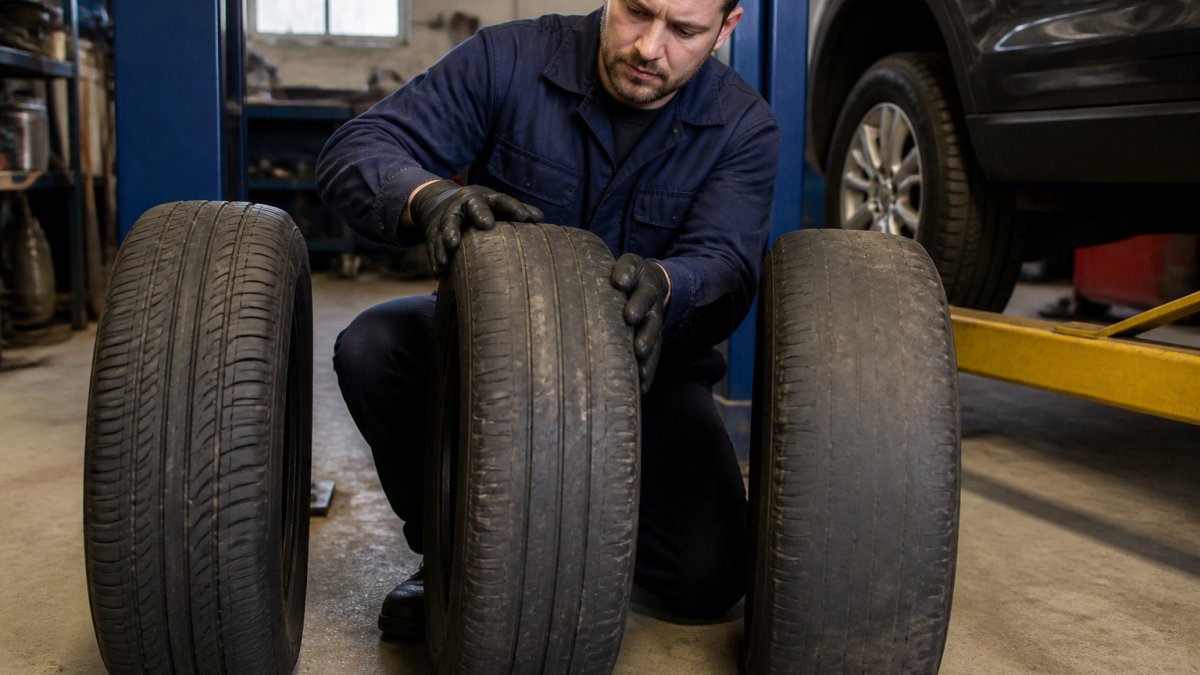
- Uneven tire wear across the tread
- Fluid spots under the car
- A slow or rough start, or dim lights
- Coolant or burning smells
- Wipers that streak or chatter
Uneven tire wear deserves a closer look, since it can point to alignment or suspension problems rather than the tires themselves. Our guide to common causes of uneven tire wear walks through how to read the pattern.
DIY Checks vs. Work for a Professional
Checking tire pressure, topping off washer fluid, and reading your oil level are safe for almost anyone. Changing engine oil, replacing brake pads, and diagnosing a fluid leak are not, and the difference is not just skill.
A common mistake is attempting a repair you are not equipped for and turning a maintenance item into a bigger bill. If you are unsure where the line is, our article on spotting dishonest mechanic practices covers what a fair estimate and an honest inspection should look like.
Finding Trustworthy Routine Car Maintenance Near Me
When you search for routine car maintenance near me, look for three things: ASE-certified technicians, a written estimate before work starts, and a warranty on the work performed. Ask whether the shop shows you what it found, and whether it will tell you when a repair can safely wait.
That is how we run Mason Street Auto Care. Our ASE-certified technicians perform photo-backed inspections, give you a clear estimate up front, and stand behind the work with a warranty. You can see the full list of what we service on our services page.
If your maintenance is due and you would rather deal with a shop that shows you the evidence, we are ready to help. Book online, call (970) 416-1234, or stop by South Mason. Book service or reach the shop and get your vehicle on a schedule that fits how you actually drive.
Frequently Asked Questions
What qualifies as routine maintenance on a car?
Routine maintenance is the scheduled work that keeps a vehicle safe and reliable, done on a set interval rather than in response to a breakdown. It includes oil and filter changes, fluid level checks and top-offs, tire rotation and pressure checks, brake inspection, battery testing, and replacing wear items like belts, hoses, and wipers. Following the service interval in your owner's manual is the simplest way to stay on track.
How often should routine car maintenance be done?
Most vehicles need an oil and filter change every 5,000 to 7,500 miles, depending on oil type and driving habits. Tire rotations typically fall at the same interval, while brake, battery, and fluid inspections usually happen once or twice a year. Your owner's manual lists the exact schedule for your model. If you commute in stop-and-go traffic or tow regularly, shorten those intervals.
What is the difference between routine maintenance and a repair?
Routine maintenance is planned and preventive: you replace worn parts and check systems before they fail. A repair fixes something that has already broken or is failing, like a dead alternator or a leaking radiator. Skipping routine maintenance is one of the main reasons repairs happen in the first place. Keeping up with scheduled service and your service history usually reduces both breakdowns and long-term repair costs.
How much does routine car maintenance cost?
Cost depends on your vehicle, the tasks due at that interval, and local labor rates, so there is no single figure that applies to every car. A basic oil change and inspection sits at the low end, while a major service interval with multiple fluid changes costs more. Ask for a written estimate before work begins and confirm what is included, so you can compare quotes on equal terms.
Can I follow my car's maintenance schedule by mileage instead of by time?
Use whichever comes first. A car driven 3,000 miles a year still needs annual oil changes because fluids degrade over time, and a high-mileage commuter may hit mileage intervals well before the calendar ones. Check both the time and mileage columns in your owner's manual, and note that severe driving conditions, like short trips or heavy traffic, can move service up.
Which routine maintenance tasks can I do myself?
Checking tire pressure, topping off washer fluid, inspecting wiper blades, and checking oil and coolant levels are safe for most drivers and take only a few minutes. Oil changes, brake work, and battery replacement are better left to a professional if you lack tools or experience. A shop with ASE-certified technicians also documents the inspection, which helps with warranty claims and resale value.