 blog
Best Auto Repair Shops in Fort Collins: 2026 Guide
Last Updated: October 23, 2026
Quick Summary
The best auto repair shops in Fort Collins put estimates in writing before touching your car, show you the worn part instead of just naming it, and stand behind the work with a real warranty. Verify ASE certification, communication style, and warranty terms before handing over your keys.
- Ask whether the shop charges a separate diagnostic fee and whether it is credited toward the repair.
- A strong warranty states its duration in both time and mileage and covers labor as well as parts.
- Use the same scoring sheet for every shop and rate each criterion as Met, Partially Met, or Not Met.
- Weight credentials, diagnostic transparency, and warranty higher for diagnostics and major repairs.
- Ask whether the shop handles diesel and heavy-duty work before booking for a truck.
Table of Contents
- What the Best Auto Repair Shops in Fort Collins Have in Common
- How to Choose a Reputable Auto Repair Shop
- Auto Repair Estimates: What a Written Quote Should Include
- Auto Repair Shop Rates: What You're Actually Paying For
- Auto Repair Warranty: What It Should Cover
- Comparing Fort Collins Auto Repair Shops Side by Side
- Services to Expect From a Full-Service Auto Repair Shop
- Conclusion
- Frequently Asked Questions
What the Best Auto Repair Shops in Fort Collins Have in Common
Finding the best auto repair shops in Fort Collins starts with understanding what separates a trustworthy shop from a risky one.
The best shops share a few traits. They put estimates in writing before touching your car. They show you the worn part instead of just naming it.
One honest note: no single shop is right for every driver. A shop that's excellent for a commuter sedan may not be the best fit for a heavy-duty truck.
Below, we break down exactly how to evaluate a shop, what a fair estimate looks like, and how to compare Fort Collins auto repair options side by side.
How to Choose a Reputable Auto Repair Shop
Choosing a reputable auto repair shop means verifying three things before you hand over your keys: credentials, communication style, and warranty terms. A shop that's clear on all three is usually a safe bet.
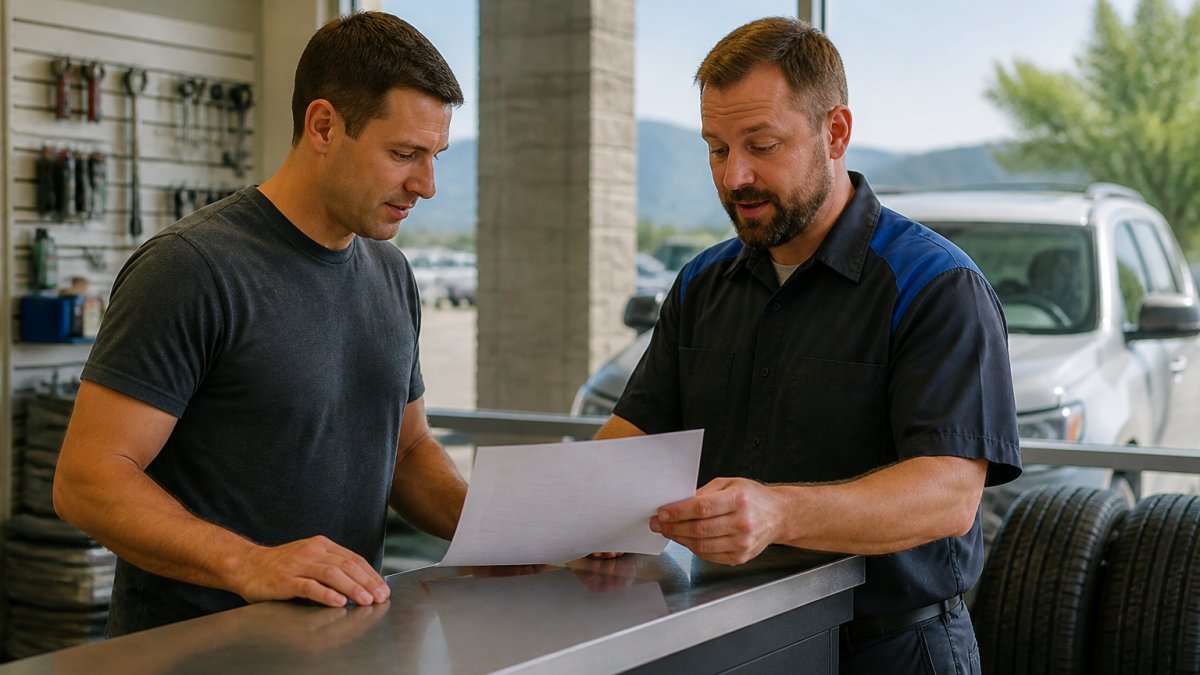
Start with a simple phone call. Ask how they handle estimates and whether they'll call before doing any work beyond the quote. A shop that hesitates on that question is telling you something.
A common mistake is picking a shop purely on the lowest quoted price. Cheap quotes often hide diagnostic fees or parts upgrades added later. Ask upfront what's included.
Credentials and Certifications to Look For
The clearest credential to check is ASE certification. ASE certification is a nationally recognized credential from the National Institute for Automotive Service Excellence, earned through testing and required work experience. You can verify a technician's status through the ASE certification lookup.
Beyond ASE, look for:
- A written warranty policy stated before work begins
- Technicians who specialize in your vehicle type
- A shop that provides written estimates as required under consumer protection rules
The FTC's guidance on auto repair reminds drivers that they're entitled to a written estimate and should keep a copy. Ask for one every time.
Auto Repair Estimates: What a Written Quote Should Include
A proper auto repair estimate is a written document that lists every part, every labor hour, and the total before any work starts. If a shop won't put it in writing, walk away.
A complete estimate should include the diagnosis, the parts needed with part numbers, labor time, and the total cost. It should also note whether the price is a firm quote or an estimate that could change.
When you see unfamiliar terms on a quote, look them up rather than guessing.
Auto Repair Shop Rates: What You're Actually Paying For
Auto repair shop rates cover two things: parts and labor. Labor is billed by the hour, and the rate reflects technician skill, shop overhead, and diagnostic equipment. Parts pricing varies by whether you choose original equipment or aftermarket components.
Drivers often ask why one shop quotes more than another for the same job. The difference usually comes down to labor rate, part quality, and how thorough the diagnostic step is.
Ask each shop to break the quote into parts and labor. That breakdown lets you compare fairly instead of comparing one total against another.
Auto Repair Warranty: What It Should Cover
An auto repair warranty is the shop's written promise to stand behind its work for a set period. It should cover both parts and labor, and it should be explained before you approve the repair. Warranty terms are one of the clearest signals of a shop's confidence, and they are also one of the least standardized parts of the repair experience, which is why you need to read them rather than assume them.
What a strong warranty looks like
Ask three questions about any warranty:
- How long does it last, in months or miles?
- Does it cover labor as well as parts?
- What happens if the same problem returns?
A strong warranty states its duration in both time and mileage, covers labor as well as parts, and explains the process for a return visit. A common pattern is a limited warranty that covers the specific repair performed, with exclusions for unrelated components, wear items, and customer-supplied parts. Ask which parts are excluded and whether aftermarket parts carry a different warranty than original equipment parts.
Parts policies and exclusions
Warranty coverage often depends on the parts used. Original equipment parts may carry a manufacturer warranty in addition to the shop's labor warranty, while aftermarket parts may carry a shorter or separate warranty. Ask the shop to state on the estimate which parts are being installed and what warranty applies to each. If you supply your own parts, expect the shop to warranty only the labor, if anything.
If a repair does not resolve the issue
Get the warranty terms in writing before work begins, and keep the estimate and final invoice. If the same problem returns within the warranty period, contact the shop and describe the symptoms, the date of the original repair, and the invoice number. Ask whether the return visit is covered under the warranty and whether a diagnostic fee applies. If you and the shop disagree, ask for the dispute process in writing and keep a record of all communication.
Get the answer in writing. A shop confident in its work will put the warranty terms on the estimate without being pushed.
Comparing Fort Collins Auto Repair Shops Side by Side
Most lists of local repair shops give you a ranking without telling you how it was built. That makes it hard to know whether a shop is genuinely a better fit for your repair or just better at marketing. This section explains the criteria we use to compare shops, how to weight them for your own situation, and how to run a fair side-by-side comparison in about 20 minutes.
How to compare shops on the same criteria
Use the same scoring sheet for every shop you're considering. Rate each criterion as Met, Partially Met, or Not Met, and note the source of your information (shop website, phone call, written estimate, or review pattern). Comparing shops on identical criteria is the only way to avoid choosing on price alone.
- ASE-certified technicians on staff, with certification lookup available
- Written estimate provided before work begins, including diagnostic fee policy
- Photo or in-person explanation of the diagnosis
- Warranty terms stated in writing, covering parts and labor
- Clear communication about timeline and cost changes
- Handles your vehicle type and repair need (sedan, truck, diesel, hybrid)
- Appointment availability, after-hours drop-off, and shuttle or loaner options
- Payment methods accepted and financing availability
| Criterion | What to Verify | Why It Matters | How to Weight It |
|---|---|---|---|
| Credentials | ASE certification and specialty training | Signals tested competence | High for diagnostics and major repairs |
| Estimates | Written quote upfront, diagnostic fee disclosed | Prevents surprise charges | High for every repair |
| Diagnostics | Photo-backed inspection and explanation | Confirms the repair is needed | High for check-engine-light issues |
| Warranty | Parts and labor covered, duration in months or miles | Protects you after the fix | High for major repairs |
| Communication | Callback before extra work, timeline updates | Keeps you in control | Medium for routine maintenance |
| Access | Appointment availability, drop-off, shuttle | Reduces disruption | Medium, higher for fleet or single-vehicle households |
Weight the criteria to your repair
A commuter sedan due for an oil change and brake inspection has different priorities than a heavy-duty truck with a check-engine light. For routine maintenance, weight access and communication higher: can you get in this week, and will the shop call before adding a cabin filter? For diagnostics and major repairs, weight credentials, diagnostic transparency, and warranty higher. A shop that is excellent for a brake job may not be the best fit for a diesel emissions issue, and a shop that specializes in one vehicle type may not be the cheapest for a simple oil change.
Verify before you commit
Call each shop and ask the same three questions: How do you handle estimates and diagnostic fees? What are your warranty terms in writing? Do you handle my vehicle type and repair? A shop that hesitates on any of these is telling you something.
Once you've compared a few shops on the same sheet, the next step is booking. You can book service or reach the shop to schedule an appointment or ask questions before you commit.
Services to Expect From a Full-Service Auto Repair Shop
A full-service auto repair shop handles routine maintenance and major repairs under one roof, so you're not bounced between specialists. That range matters when a single visit turns up more than one issue.
Expect these core services:
- Oil changes and routine maintenance
- Brake inspection and repair
- Tire service, rotation, and alignment
- Engine diagnostics and check-engine-light service
- Suspension and steering repair
- Battery and charging system checks
- Heating and air conditioning service
For trucks and heavier vehicles, ask whether the shop handles diesel and heavy-duty work before booking. Not every shop does.
You can see the full range of what we handle on our services page.
Conclusion
The hardest part of finding a good repair shop isn't the search. It's trusting the shop once you're there. That trust comes from written estimates, honest diagnostics, and a warranty that means something.
At Mason Street Auto Care, we built our shop around those basics. Our ASE-certified technicians provide photo-backed inspections and clear estimates before any work begins, and every repair is warranty-backed. If something isn't right, we stand behind the fix.
Ready to stop guessing? Schedule Service with Mason Street Auto Care.
Frequently Asked Questions
How do I know if an auto repair shop is reputable?
Start with credentials: ASE-certified technicians, a clean and organized shop, and a written estimate before any work begins. Check Google and Yelp reviews for patterns, not just star ratings, and look for shops that explain findings with photos or inspection notes. Ask about warranty terms and whether they will show you the failed part. A reputable shop answers these questions without pressure and puts the estimate in writing.
What should I compare when choosing an auto repair shop?
Compare five things: technician certifications, how estimates are presented, labor rates and parts sourcing, warranty length and coverage, and communication style. A shop that provides photo-backed inspections and a written estimate is easier to trust than one that quotes a number verbally. Also ask whether they handle routine maintenance and diagnostics in-house, so you are not bounced between shops for different problems.
Should I get a second estimate for car repairs?
For major repairs, a second estimate is reasonable and most shops expect it. Compare what each estimate includes: parts quality, labor hours, and whether diagnostics fees are applied to the repair. If one quote is far lower, ask what is excluded. For routine maintenance like oil changes, a second quote usually is not worth the time. The goal is comparing scope, not just the bottom line.
Do auto repair shops offer warranties on their work?
Many independent shops back repairs with a warranty, but terms vary widely. Ask how long the warranty lasts, whether it covers parts and labor, and whether it applies at other locations. Get the warranty in writing on your invoice. A shop that stands behind its work will state coverage clearly before you approve the repair, not after something goes wrong.